
Key Takeaway: Ranch homes offer single-level living, easier accessibility, and simpler maintenance. Two-story homes cost less per square foot and fit more house on smaller lots. The right choice depends on your family’s needs, your lot size, and how long you plan to stay.
Ranch or two-story? It’s one of the first decisions you’ll face when building a custom home, and it affects everything from your daily routine to your long-term costs.
At Custom Creations Building, I’ve built both styles across York, Lancaster, and Cumberland Counties for over a decade. I’ve watched young families choose two-story plans for the extra bedrooms, only to return years later wanting a ranch for easier living. I’ve also seen empty nesters pick ranch homes and regret not having a second floor for visiting grandkids.
There’s no universal right answer. But there is a right answer for you. This guide breaks down the pros, cons, and real costs of each floor plan style so you can make a decision that fits your life now and in the years ahead.
What’s the Difference Between Ranch and Two-Story Homes?
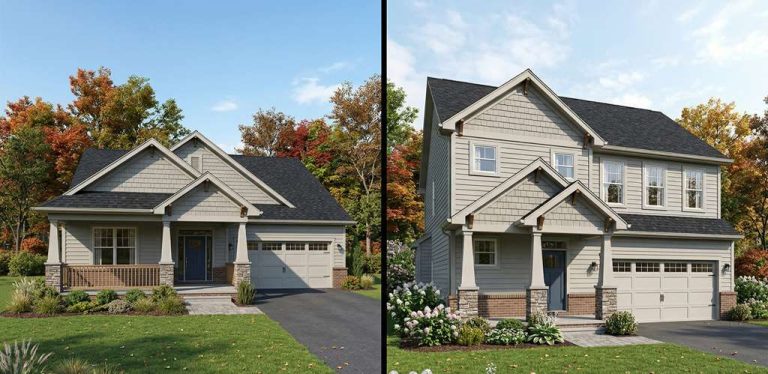
A ranch home is a single-story layout where all living spaces sit on one level. A two-story home stacks living areas across two floors, typically with bedrooms upstairs and common areas on the main level.
That’s the simple definition. But the differences go much deeper.
Ranch homes spread horizontally across the lot. They need larger foundations, more roofing material, and more land. In exchange, you get no stairs to climb, easier access to every room, and simpler maintenance.
Two-story homes build vertically. They use smaller foundations and roof footprints for the same square footage. You’ll have stairs to deal with, but you’ll also get natural separation between living and sleeping spaces.
Both styles can include open floor plans, flex rooms, and modern layouts. The choice isn’t about which looks better. It’s about which works better for how you actually live.
Ranch Home Pros and Cons
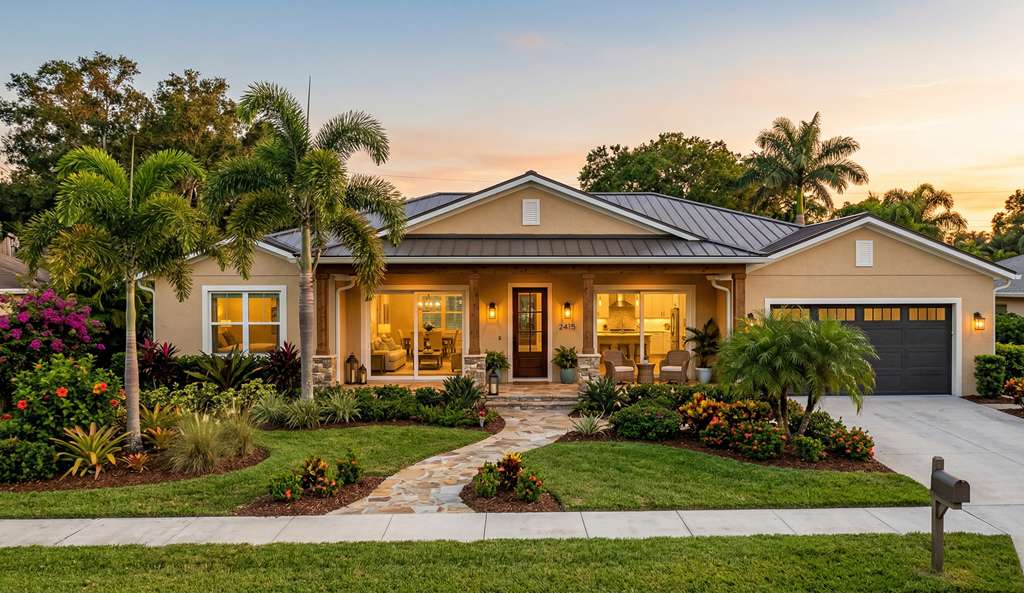
Pros of Ranch-Style Homes
Single-level living is the biggest draw. No stairs means easier daily movement, whether you’re carrying laundry, chasing toddlers, or planning to age in place. A 2024 National Association of Home Builders survey found that 64% of homebuyers prefer single-story homes when given the choice.
Accessibility is built in. Ranch homes work for people of all ages and mobility levels without modification. If you’re building your “forever home,” this matters.
Maintenance stays manageable. Cleaning gutters, washing windows, and accessing the roof are all easier when you’re not dealing with a second story. You can handle most exterior tasks from a standard ladder.
Open layouts feel natural. Without stairs eating up floor space, ranch homes often flow more seamlessly between kitchen, dining, and living areas. The horizontal layout lends itself to indoor-outdoor connections with patios and covered porches.
Emergency evacuation is simpler. Every bedroom has a ground-floor exit. In case of fire or severe weather, getting out quickly is straightforward.
Cons of Ranch-Style Homes
Cost per square foot runs higher. A ranch home requires more foundation and more roofing to achieve the same living space as a two-story. In Central PA, ranch homes typically cost $220 to $300 per square foot to build in 2026, compared to $200 to $280 for two-story construction. For a detailed breakdown, see our guide on what it costs to build a custom home in Central PA.
You’ll need a larger lot. A 2,000 square foot ranch might require 8,500 to 10,000 square feet of land to meet setback requirements. A comparable two-story needs only 5,500 to 7,000 square feet. In York and Lancaster Counties where land prices vary significantly, that difference can add $15,000 to $40,000 to your total project.
Privacy between bedrooms can be limited. With all rooms on one level, sound travels more easily. Parents might hear teenagers up late, and vice versa.
Yard space shrinks. The larger footprint leaves less room for outdoor living, play areas, or future additions.
Two-Story Home Pros and Cons
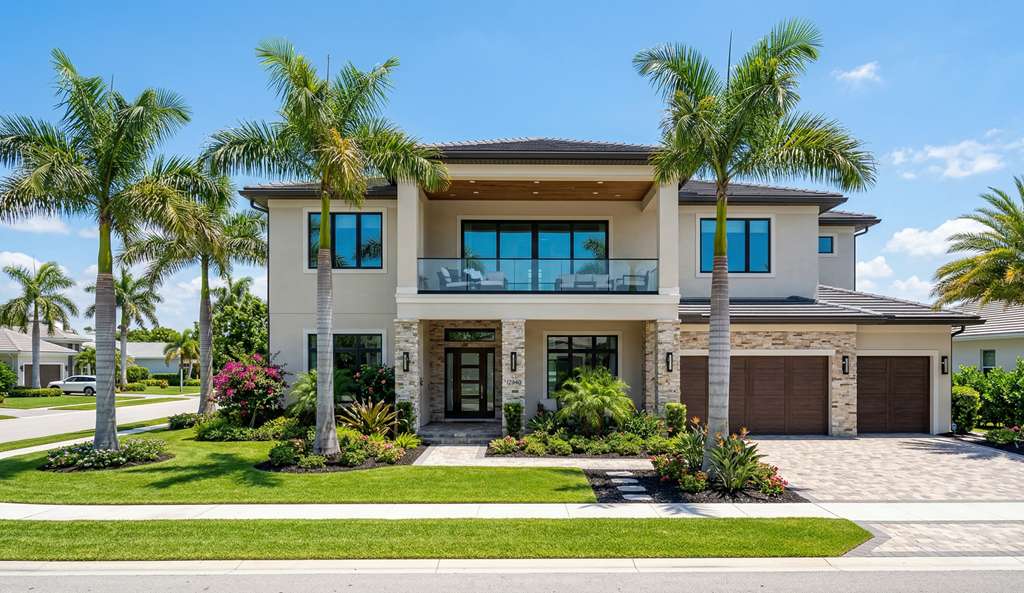
Pros of Two-Story Homes
Lower cost per square foot makes this the budget-friendly choice for larger homes. Because you’re building up instead of out, you need less foundation and less roofing material. A 2,000 square foot two-story home in Central PA costs roughly $400,000 to $560,000 to build in 2026. A comparable ranch runs $440,000 to $600,000.
Small lots work. If you’re building in a subdivision with narrow lots or setback restrictions, a two-story design lets you fit more house on less land. You’ll also keep more yard for outdoor living.
Bedrooms stay separate from living areas. Parents get privacy. Kids can play upstairs while adults entertain downstairs. Sleepovers and late-night TV don’t keep everyone awake.
Views improve on the second floor. If your lot overlooks farmland or wooded areas common in the Susquehanna Valley, upstairs windows and balconies make the most of it.
Security feels easier. You can leave second-floor windows open for airflow without the same security concerns as ground-level rooms.
Cons of Two-Story Homes
Stairs are the obvious trade-off. Carrying laundry, furniture, and groceries between floors gets old. For households with young children or aging family members, stairs present safety risks.
Heating costs can run higher. Heat rises. Keeping the upstairs comfortable during Central PA winters while not overheating the main floor often requires zoned HVAC systems. Two-story homes can be 5 to 10% less energy efficient than ranch homes, translating to $150 to $400 more per year in utility costs.
Noise travels vertically. Footsteps, music, and movement on the second floor can be heard downstairs. Quality construction and insulation help, but they don’t eliminate the issue entirely.
Exterior maintenance gets complicated. Cleaning second-story windows, painting trim, and accessing gutters requires taller ladders or professional help.
Cost Comparison: Ranch vs. Two-Story in Central PA (2026)
Here’s how construction costs compare for both styles in York, Lancaster, and Cumberland Counties:
| Home Size | Ranch Cost (2026) | Two-Story Cost (2026) | Potential Savings |
|---|---|---|---|
| 1,500 sq ft | $330,000 – $450,000 | $300,000 – $420,000 | $30,000 – $40,000 |
| 2,000 sq ft | $440,000 – $600,000 | $400,000 – $560,000 | $40,000 – $50,000 |
| 2,500 sq ft | $550,000 – $750,000 | $500,000 – $700,000 | $50,000 – $60,000 |
Note: Costs are estimates based on mid-range finishes in Central PA. Actual costs vary by location, materials, and site conditions. Land costs not included.
The pattern is consistent: two-story homes cost 10 to 15% less to build for the same square footage. That gap widens as home size increases.
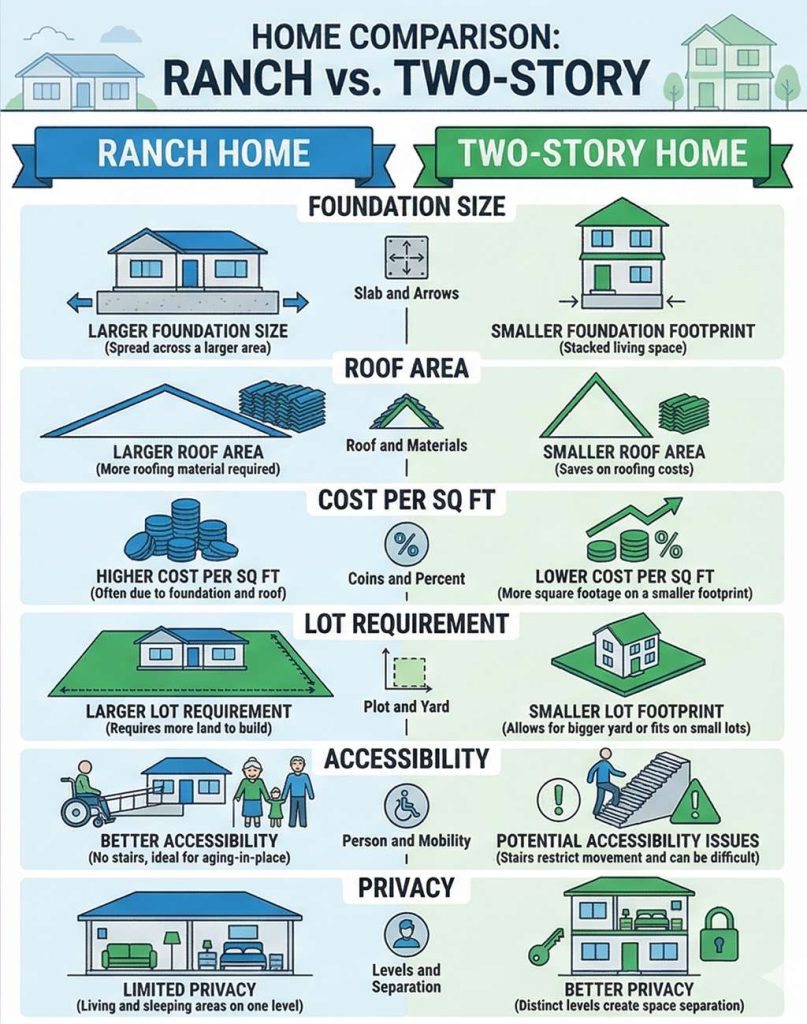
But construction cost isn’t the whole picture. Factor in land costs, energy efficiency, and long-term maintenance, and the difference narrows for some buyers.
How to Choose the Right Floor Plan for Your Family
Assess Your Household’s Daily Needs
Think about who lives with you now. Do you have young children who need supervision at night? Aging parents who struggle with stairs? Teenagers who want their own space? A ranch works best when accessibility matters. A two-story works best when separation between generations or noise zones is a priority.
Consider Your Lot Size and Location
Check your lot dimensions before falling in love with a floor plan. Narrow lots (under 70 feet wide) often require two-story designs to meet setback requirements. Larger lots give you the flexibility to spread out with a ranch. If you haven’t purchased land yet, knowing your preferred style helps narrow your search.
Think About Long-Term Plans
How long do you plan to stay? If this is your starter home and you’ll move in 5 to 7 years, cost per square foot matters most. A two-story gives you more space for less money. If you’re building your forever home and want to age in place, a ranch eliminates future mobility concerns.
Evaluate Your Budget Honestly
A two-story home stretches your construction budget further. But if you’re tight on land or building in an expensive area of Lancaster County, the lot savings might not apply to you. Get quotes for both styles on your specific lot before deciding.
Walk Through Model Homes and Past Projects
Floor plans on paper don’t tell the whole story. Visit both ranch and two-story homes to feel the difference. Pay attention to traffic flow, noise, and how natural light moves through each layout. I encourage buyers to tour multiple styles before making a decision. For a step-by-step look at what to expect, read our custom home building timeline.
What Building 90+ Homes Has Taught Me
After building custom homes across the Susquehanna Valley, here’s what I’ve learned:
Young families often underestimate the stairs. The nursery feels manageable until you’re making trips up and down at 2 a.m. with a newborn. Some parents love having bedrooms upstairs for privacy. Others wish they’d gone single-story.
Resale depends on your market. In Central PA, ranch homes appeal to retirees and buyers seeking single-level living. But in family-heavy neighborhoods, two-story homes move quickly because they offer more bedrooms at a lower price point.
Hybrid designs exist. A ranch with a bonus room upstairs gives you the best of both: single-level living for daily life, with extra space for guests or hobbies. A two-story with a main-floor primary suite lets you stay downstairs as you age while keeping upstairs bedrooms for kids or visitors. We build both styles—explore our ranch designs and two-story designs to see what’s possible.
Which Floor Plan Wins for Resale Value?
Neither style consistently outperforms the other. Resale value depends on your local market, your lot, and how well the home was maintained.
According to the JLC Cost vs. Value Report (2025), exterior improvements and curb appeal have the highest ROI regardless of floor plan style. A well-designed ranch and a well-designed two-story both hold their value when they’re built with quality materials and maintained properly.
What does hurt resale? Building a two-story in a neighborhood of ranches, or vice versa. Homes that match the surrounding style tend to appraise better.
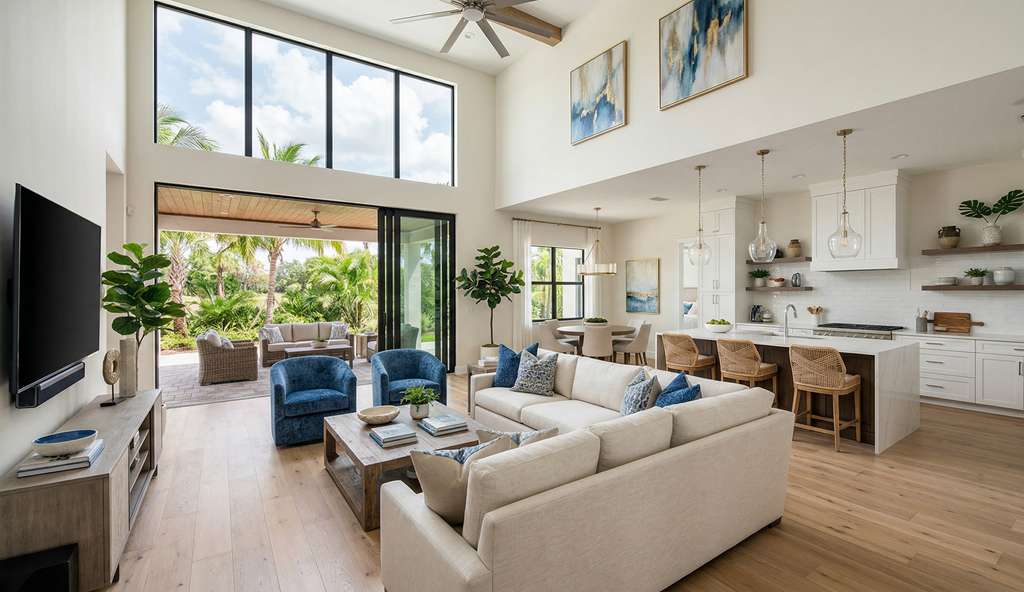
Floor Plan Features to Consider Beyond Stories
Regardless of which style you choose, pay attention to these layout details:
Primary suite location. Do you want it on the main floor for easy access, or upstairs for privacy and separation from common areas? We’re seeing more clients request first-floor master suites in two-story homes, giving them the best of both layouts.
Kitchen-to-garage flow. How many steps between your car and your refrigerator? This matters more than most buyers realize, especially during Central PA winters when you’re carrying groceries through snow.
Mudroom placement. In our climate with mud season, snow, and everything in between, a well-designed mudroom is essential. Make sure it fits your chosen floor plan.
Laundry room placement. A laundry room near bedrooms saves time. In two-story homes, upstairs laundry eliminates hauling clothes between floors.
Flex space. Can a room serve multiple purposes as your needs change? A home office today might become a nursery tomorrow.
Outdoor connections. How does the main living area connect to your backyard, patio, or porch? Ranch homes often excel here with sliding doors off the great room.
Frequently Asked Questions About Ranch vs. Two-Story Homes
Is it cheaper to build a ranch or a two-story home?
Two-story homes cost less per square foot because they need smaller foundations and roofs. A 2,000 square foot two-story in Central PA costs roughly $400,000 to $560,000 in 2026, compared to $440,000 to $600,000 for a ranch of the same size.
Which floor plan is better for families with young children?
It depends on your priorities. Two-story homes offer privacy and bedroom separation, but stairs pose safety risks for toddlers. Ranch homes eliminate stair hazards but may feel cramped if bedrooms are close to living areas. Many families prefer a two-story with a main-floor guest room that can serve as a nursery.
Are ranch homes easier to maintain?
Yes. Single-story homes allow easier access to gutters, windows, roofing, and exterior walls. Most maintenance tasks can be done from a standard ladder without professional help.
Do ranch homes have better resale value?
Not universally. In Central PA, ranch homes appeal to retirees and buyers seeking single-level living, which can support resale. But two-story homes attract families looking for more space at a lower price point. The best resale value comes from matching your home style to your neighborhood.
Can I build a hybrid floor plan with features of both?
Yes. We offer ranch plans with optional bonus rooms or lofts upstairs. Two-story plans with main-floor primary suites are also popular. These hybrid designs give flexibility as your needs change.
Which style is more energy efficient in Central PA?
Ranch homes often have a slight advantage because heat rises, making upper floors harder to keep comfortable in winter without zoned systems. However, proper insulation, high-efficiency HVAC, and energy-efficient features can make either style perform well. The difference is typically $150 to $400 per year in utility costs.
Make the Right Choice for Your Family
Choosing between a ranch and a two-story home isn’t about which style is objectively better. It’s about which style fits your family, your lot, and your long-term plans.
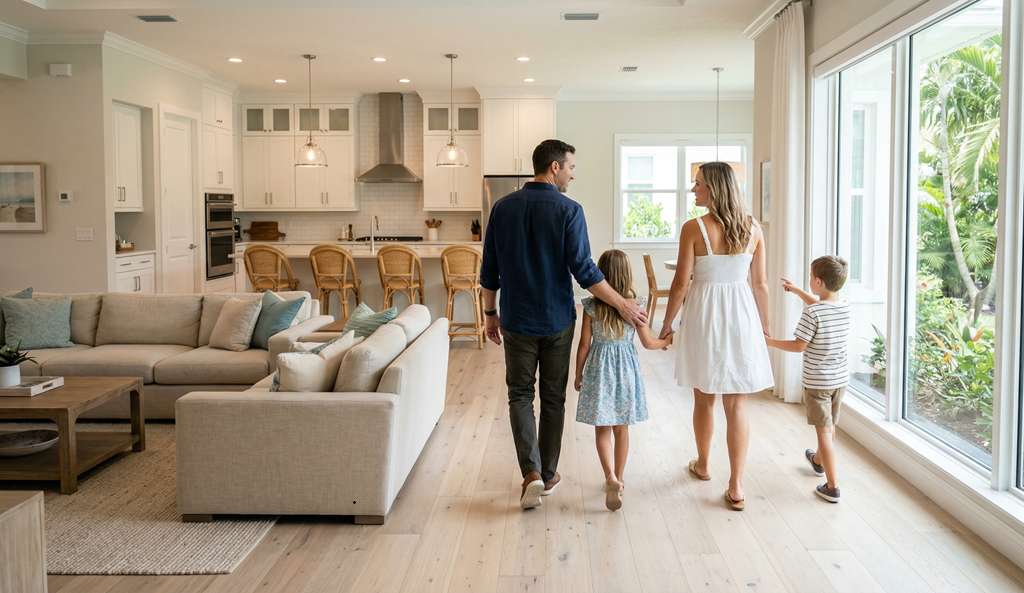
If single-level living, accessibility, and aging in place matter most, a ranch is the clear choice. If you need more space on a smaller lot or want natural separation between living and sleeping areas, a two-story makes sense.
At Custom Creations Building, we build both styles with the same commitment to quality: energy-efficient construction, pre-selected finish packages that simplify decisions, and fixed-price quotes so you know exactly what you’ll pay.
Ready to explore your options? Schedule a talk to discuss which floor plan fits your family, or browse our design library to see ranch, two-story, and townhouse options.